
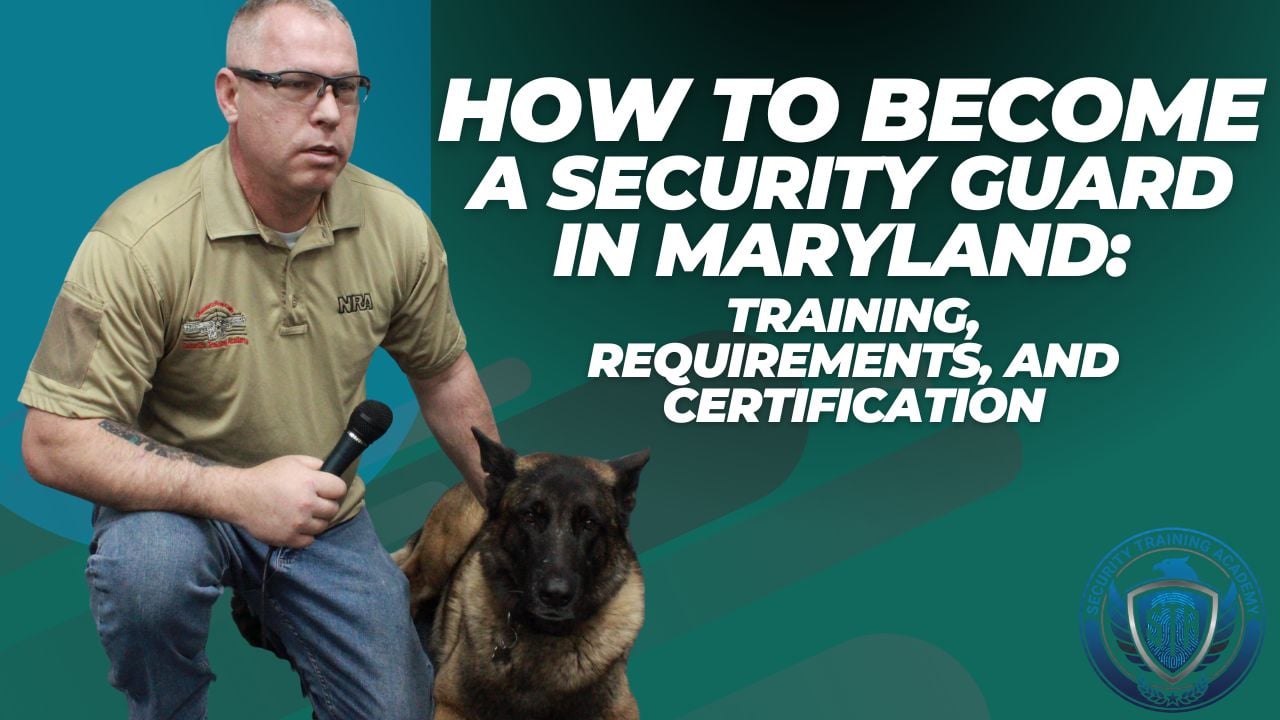
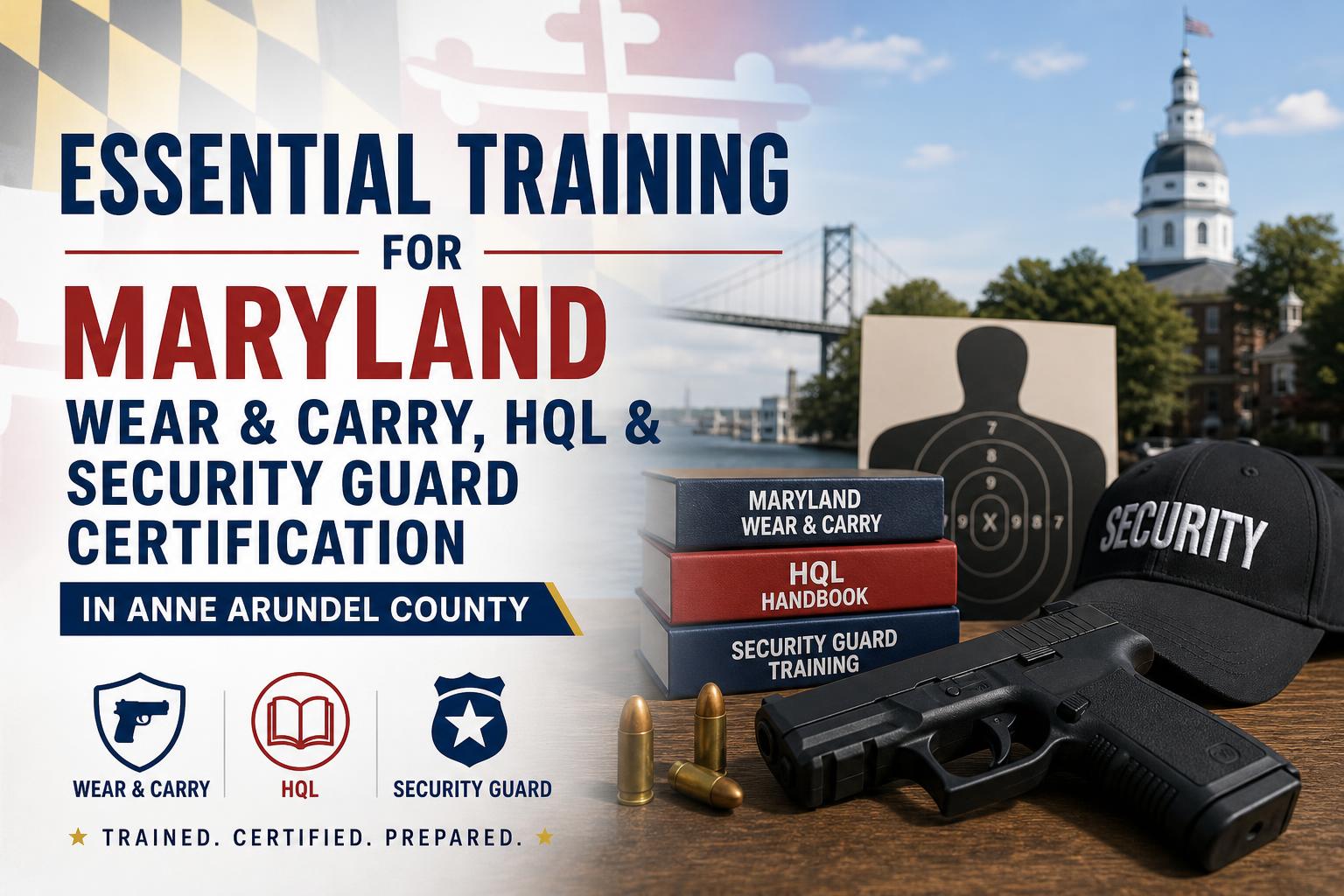
If you are considering a career in private security, Maryland offers a clear and structured path to get started. Whether you plan to work as an unarmed or armed security guard, the state outlines specific training and licensing requirements to ensure professionals operate legally and safely.
In this guide, we break down everything you need to know about becoming a security guard in Maryland, from basic qualifications to certification and ongoing training.
Why Security Guard Training Matters
Security guards play an essential role in protecting people, property, and facilities. Duties can range from routine patrols to emergency response, making proper training critical. Professional instruction prepares you to handle these responsibilities confidently, ethically, and effectively.
Step 1: Meet the Basic Requirements
To work as a security guard in Maryland, you must meet the following minimum qualifications:
Be at least 18 years old
Hold a high school diploma or GED
Have no felony convictions or serious criminal history
Be a U.S. citizen or legal resident
Submit to a fingerprint-based background check
Step 2: Complete Security Guard Training
Unarmed Security Guard Training
Unarmed security guards in Maryland are required to complete training that covers:
Legal powers and limitations
Communication and de-escalation techniques
Emergency response procedures
Report writing
Customer service and professional conduct
While some employers provide in-house instruction, completing a certified training program can improve job prospects and readiness.
Armed Security Guard Training
If you plan to carry a firearm while on duty, additional requirements apply. Armed guards must:
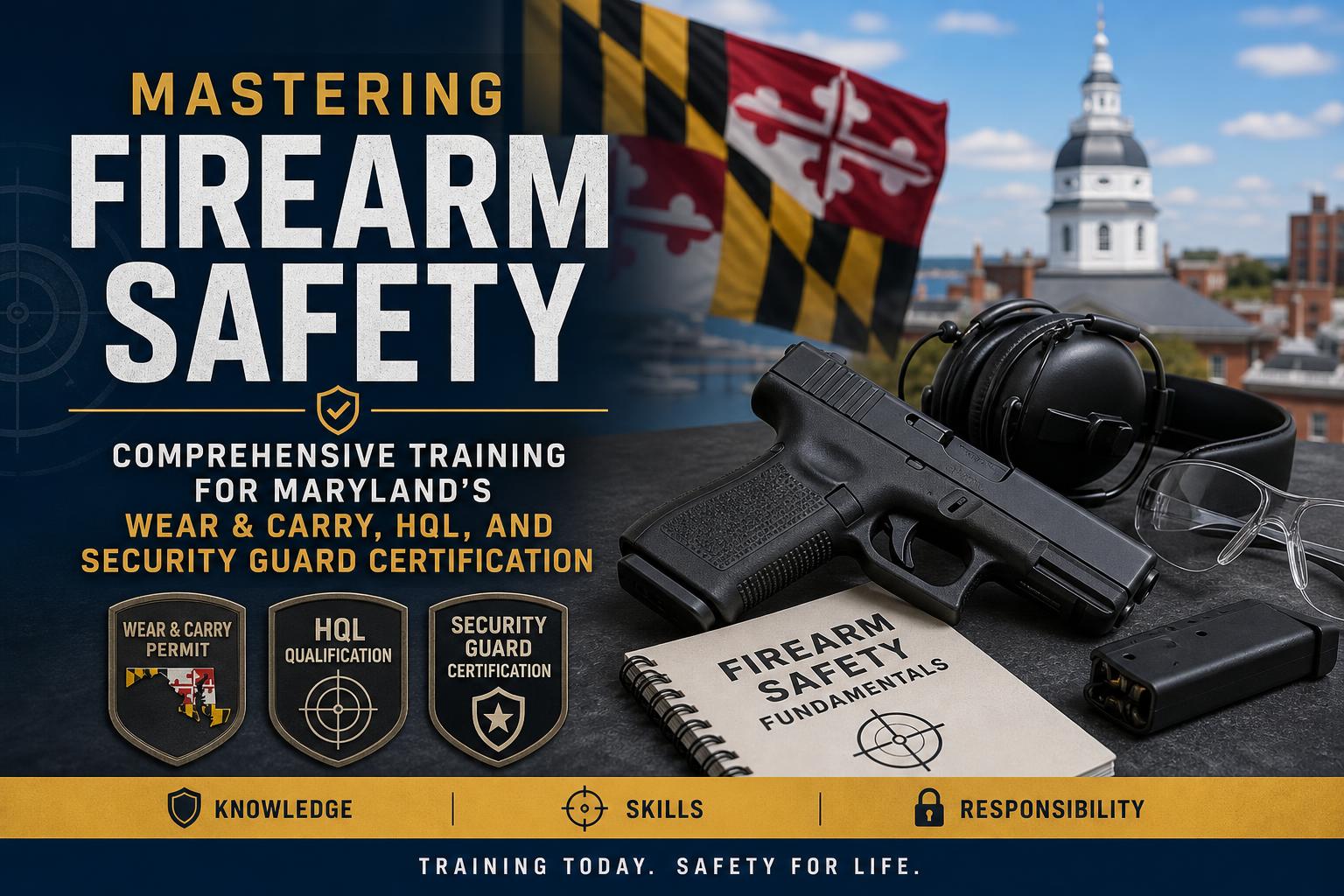
Complete a Maryland State Police-approved handgun training course
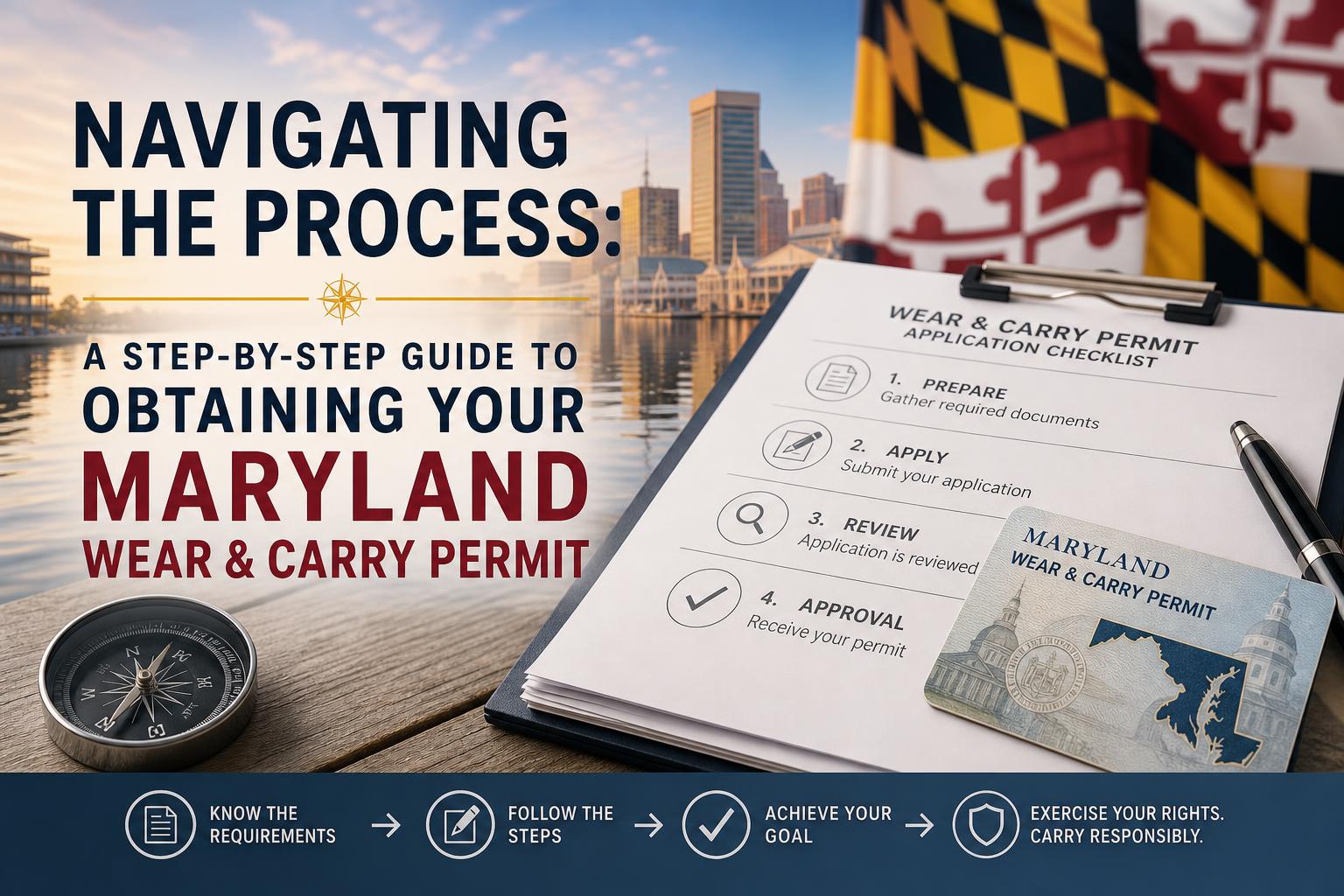
Pass an enhanced background check and obtain a Wear and Carry Permit
Qualify at a shooting range under the supervision of a licensed firearms instructor
This training focuses on firearm safety, legal responsibilities, proper handling and storage, and live-fire qualification.
Step 3: Apply for Security Guard Certification
Licensing is handled through the Maryland State Police Security Guard Licensing Division. Applicants must submit:
A completed application form
Fingerprints and background check documentation
Training certificates, if applying as an armed guard
The required application fee, which varies by license type
Security guard licenses are generally valid for three years. Renewal may require updated training or refresher courses.
Step 4: Find Employment and Continue Training
Once licensed, you may apply for positions with private security companies throughout Maryland. Many employers require ongoing or annual training to ensure guards remain compliant with state laws and industry standards.
Pro Tip:
Employers that offer continuing education, CPR and first aid certification, and firearms requalification courses can provide valuable opportunities for career advancement.
Final Thoughts
Security guard training in Maryland is designed to ensure professionals are properly prepared to protect people and property. Whether you are starting as an unarmed guard or pursuing armed certification, Maryland offers clear pathways and reputable training programs to help you succeed in the private security industry.

Leave a Reply