

Introduction: Why Maryland Wear & Carry Training Matters
A Maryland Wear & Carry Permit can allow you to carry a handgun in public, as long as you follow Maryland law. This is a big responsibility. It is not just about owning a firearm. It is about knowing the law, handling your firearm safely, and making smart choices every day.
Maryland has rules that can change, so it is important to check the most current requirements before you apply. The Maryland State Police Licensing Division is the main place to confirm permit rules, training needs, fees, and application steps.
This guide will help you understand what to expect from Maryland Wear & Carry training, how to prepare, and why good training matters.
Understanding Maryland's Wear & Carry Permit
A Maryland Wear & Carry Permit is different from simply owning a firearm. It gives approved people permission to carry a handgun in public, based on state law and permit rules.
Here are the main things to know:
- What the permit allows: The permit may allow you to carry a handgun in public, either openly or concealed, depending on the law and your permit conditions.
- Owning is not the same as carrying: Owning a firearm does not mean you can carry it anywhere you want.
- Who applies: Business owners, security workers, and responsible adults may apply for this permit.
- Who manages permits: The Maryland State Police Licensing Division reviews applications and issues permits.
- Who can qualify: Applicants must meet Maryland’s rules for eligibility.
- New permits and renewals are different: First-time applicants and renewal applicants may have different training and paperwork needs.
- Training is required: Training helps you understand safe carry, state laws, and your duties as a permit holder.
- Maryland laws matter: You must know where you can and cannot carry.
- Responsibility is key: Carrying a firearm means you must stay calm, safe, and aware.
- Stay updated: Laws and rules can change, so keep learning after you get your permit.
Core Training Requirements Applicants Should Expect
A Maryland-approved Wear & Carry course should help you learn both the classroom rules and the hands-on skills you need.
Most students should expect training in these areas:
- Classroom instruction: You will learn about laws, safety, and your legal duties.
- Firearm safety: You will review how to handle, store, and carry a firearm safely.
- Practical handling: You will learn how to safely hold, load, unload, and operate a handgun.
- Live-fire qualification: You may need to show that you can safely and accurately shoot at the range.
The goal is not just to pass the class. The goal is to help you carry in a safe and responsible way.
What Expert Instructors Focus On During Training
Good instructors do more than read from a book. They help you understand what safe carry looks like in real life.
At STA Security Training Classes, instructors focus on topics such as:
- Safe handling: You learn how to handle a firearm safely at all times.
- Maryland law: You learn the rules that apply to carrying in Maryland.
- Situational awareness: You learn how to pay attention to people, places, and risks around you.
- Holster choice and retention: You learn why a safe, secure holster matters.
- Safe drawing: You learn how to draw from a holster in a controlled way.
- Use-of-force choices: You learn when force may or may not be allowed.
- Marksmanship: You practice the basic shooting skills needed for safe and accurate fire.
- Malfunction handling: You learn what to do if a firearm does not work as expected.
- Storage and transport: You learn how to keep your firearm secure at home and while traveling.
- Mindset and accountability: You learn that carrying a firearm means making careful choices.
The Legal Education Component
Legal education is one of the most important parts of Maryland Wear & Carry training. You need to know the rules before you carry in public.
Common legal topics include:
- Use of force: You learn basic self-defense rules and when force may be legally allowed.
- Restricted places: You learn where you cannot carry a firearm.
- Talking with law enforcement: You learn how to stay respectful, calm, and clear if you speak with an officer.
- After an incident: You learn why it is important to know what steps to take after a defensive event.
- Legal resources: You learn why it is wise to get advice from trusted legal sources when needed.
This part of class helps students understand that carrying a firearm comes with serious legal duties.
Live-Fire Qualification: What Students Should Know
Range time is an important part of training. It helps instructors see how safely and accurately you handle a handgun.
During live-fire training, students often work on:
- Accuracy: You practice hitting the target in a safe and controlled way.
- Safe handling: You keep the firearm pointed in a safe direction and follow all range rules.
- Trigger control: You learn how to press the trigger without moving the firearm off target.
- Muzzle discipline: You learn to keep the muzzle pointed where it should be at all times.
- Loading and unloading: You practice these steps safely and correctly.
- Range commands: You learn how to listen, follow directions, and respond safely on the range.
If you are new to shooting, do not worry. A good instructor will guide you step by step.
Common Mistakes Applicants Make
Many permit delays and problems can be avoided with good planning. Here are common mistakes to watch for:
- Taking the wrong training course: Make sure your course meets Maryland requirements.
- Missing documents: Check your paperwork before you submit your application.
- Using old information: Always check current Maryland State Police rules.
- Waiting too long: Give yourself time to train, gather documents, and apply.
- Ignoring the legal lesson: The law is just as important as shooting skill.
- Choosing poor gear: A safe holster and proper firearm setup matter.
- Not practicing after class: Skills can fade if you do not practice.
- Forgetting renewal dates: Mark your calendar so your permit does not expire.
- Not knowing restricted areas: Learn where carry is not allowed.
- Thinking the permit is the finish line: Getting a permit is only the start of your training journey.
How to Prepare Before Taking the Course
You can make class easier by getting ready ahead of time. Before training day, try to do the following:
- Review basic firearm safety: Know the main safety rules before class starts.
- Choose the right handgun: Use a handgun that fits your hand and that you can control safely.
- Gather your identification: Check what documents you need before the course.
- Confirm ammunition needs: Ask how much ammunition to bring and what type is allowed.
- Check range rules: Make sure you know what gear, clothing, and safety items are required.
If you have questions before class, ask your instructor. It is better to ask early than to arrive unprepared.
After Training: Submitting the Application
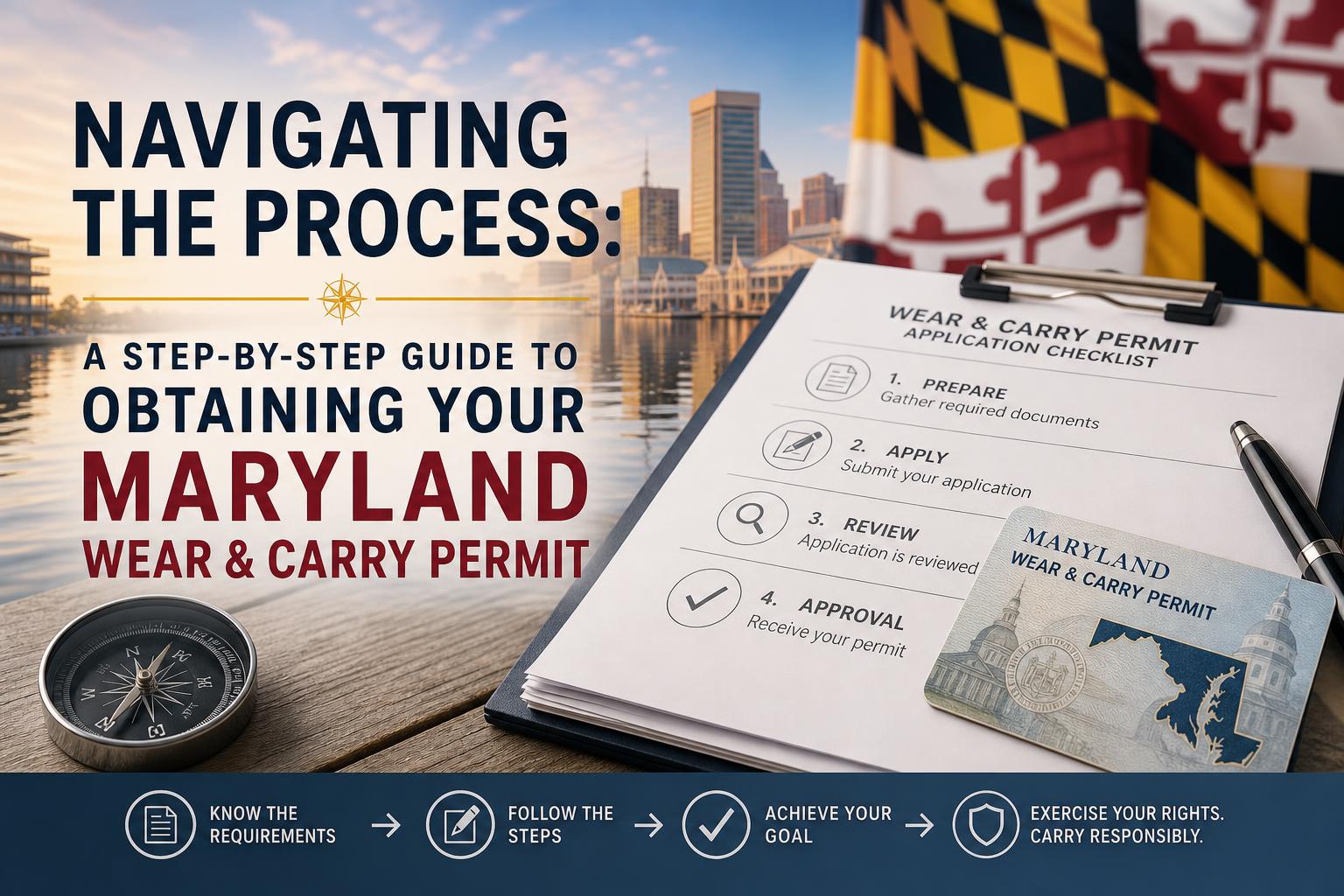
After you complete your training, you still need to finish the application process. Be sure to follow the current steps from the Maryland State Police Licensing Division.
The process may include:
- Training certificates: Keep your course completion documents safe.
- Fingerprints: Complete fingerprinting as required by Maryland.
- Online application: Submit your application through the proper state process.
- Fees: Pay all required fees.
- Background check: Complete all required background review steps.
- Status checks: Watch for updates, messages, or requests for more information.
Take your time and review your application before you send it. Small mistakes can cause delays.
Renewal Training and Continuing Education
If you already have a Maryland Wear & Carry Permit, you still need to keep learning. Renewal training and regular practice help you stay safe and ready.
Continuing education may include:
- Refresher training: Review key safety and legal points.
- Legal updates: Stay aware of changes in Maryland law.
- Live-fire practice: Keep your shooting skills sharp.
- Defensive skills training: Build safe habits over time.
- Responsible carry habits: Keep safety, control, and good judgment first.
A responsible permit holder never stops learning.
Choosing the Right Maryland Wear & Carry Instructor
The instructor you choose can make a big difference. Good training should be clear, safe, and focused on Maryland law.
Look for an instructor or training school with:
- Proper credentials: Choose qualified instructors who understand permit training.
- Maryland experience: Work with people who know Maryland’s rules and process.
- Clear teaching: The best instructors explain hard topics in a simple way.
- Safe range practices: Safety should always come first.
- Helpful support: A good school helps you understand what to do before and after class.
- Strong reviews: Read what past students say about the training.
Conclusion: Training Builds Confidence and Responsibility
Getting a Maryland Wear & Carry Permit takes time, training, and care. The class helps you learn the law, build safe habits, and understand the weight of carrying a firearm in public.
This permit is not just about passing a course. It is about making a promise to be safe, calm, and responsible every day.
Ready to begin your Maryland Wear & Carry Permit training? STA Security Training Classes is here to help. Call (443) 702-7891 or visit STA Security Training Classes to get started today.

Leave a Reply