
Introduction
Firearm safety is very important in Maryland. If you want to own a handgun, carry a handgun, or work as a security guard, you need the right training. These rules help keep you, your family, and the public safe.
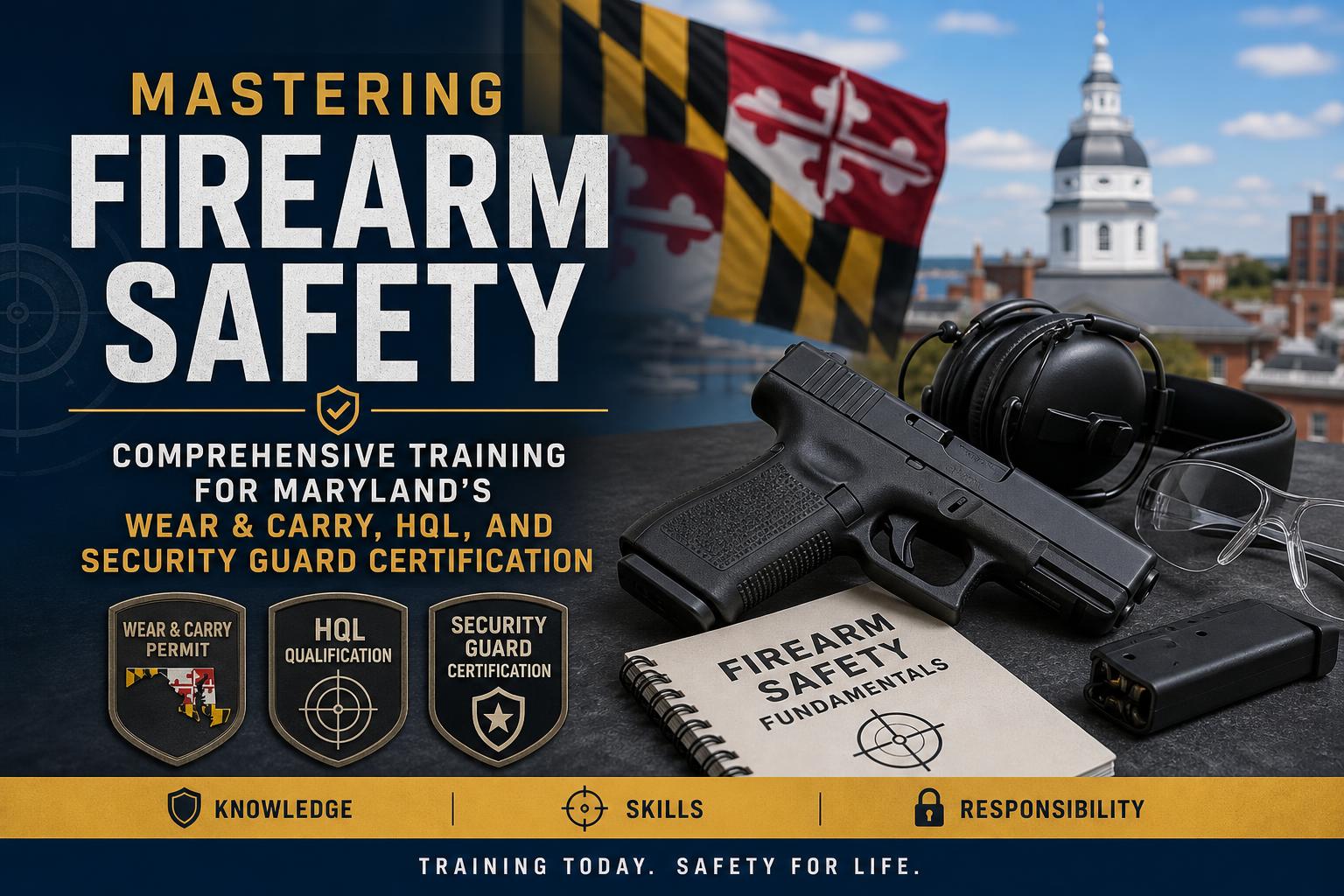
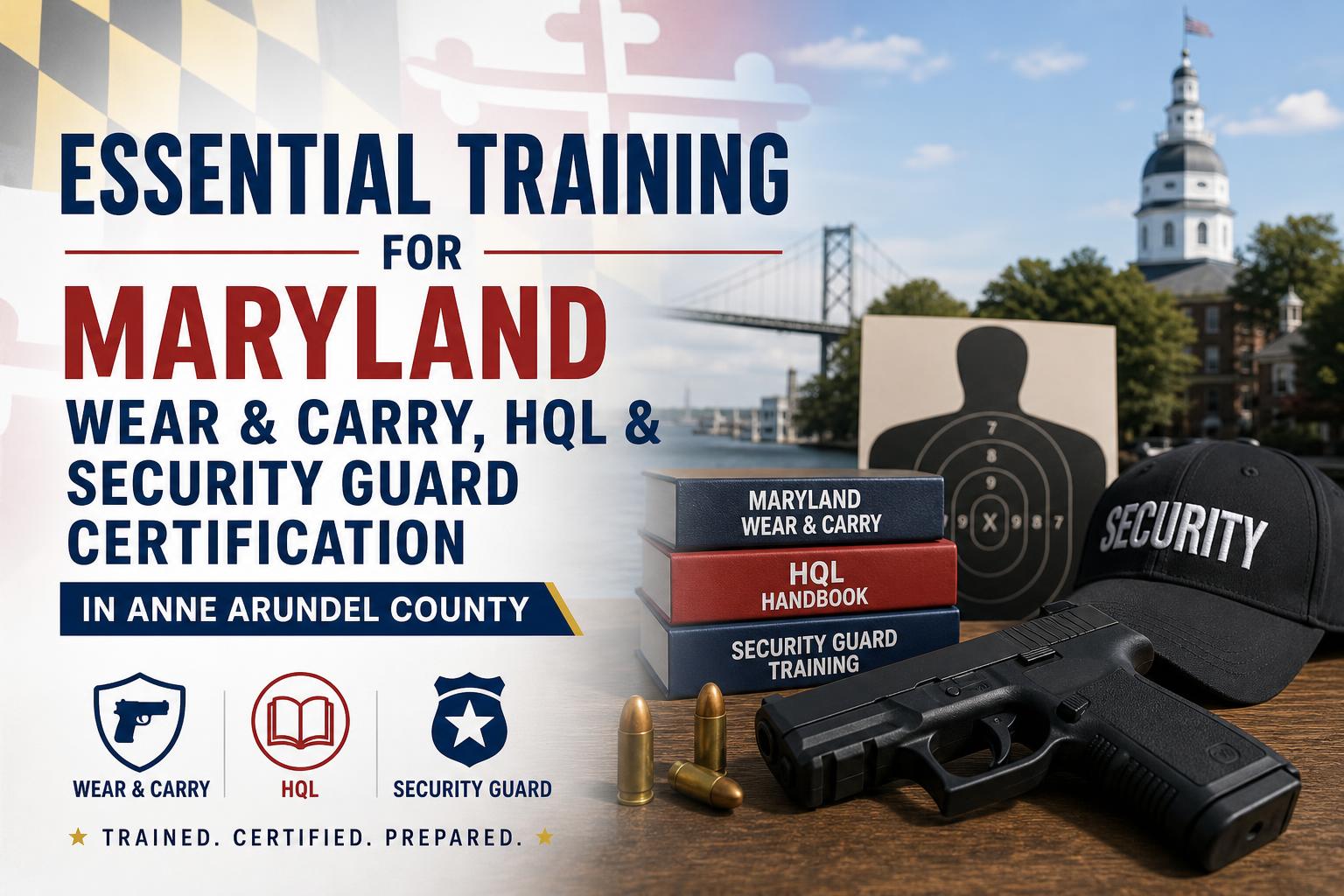
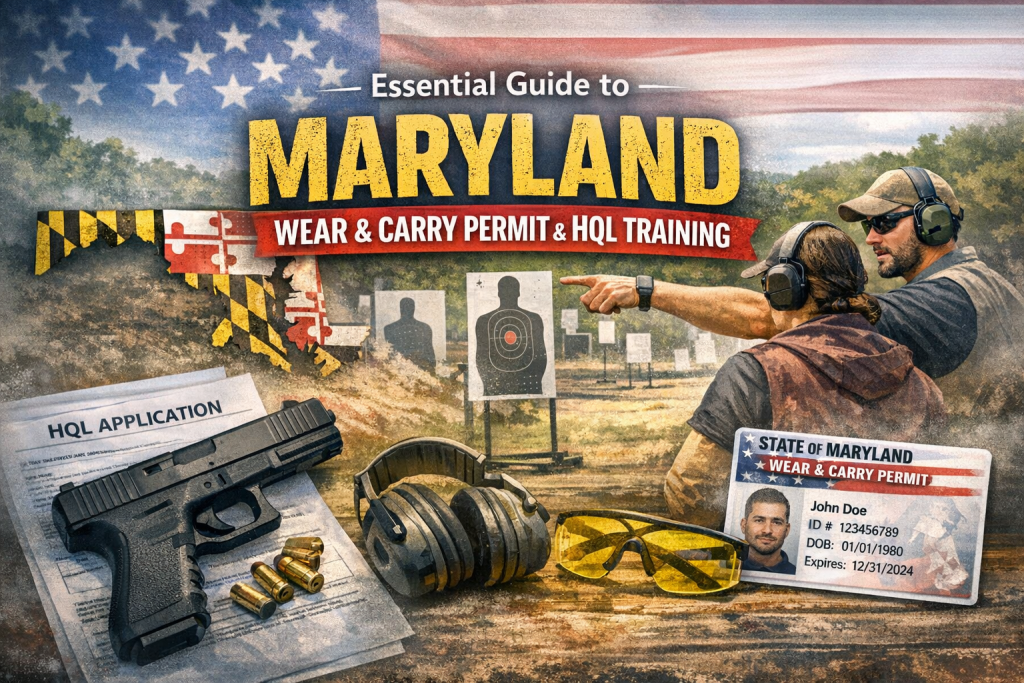
This guide explains three common types of training in Maryland: the Wear & Carry Permit, the Handgun Qualification License, also called the HQL, and Security Guard Certification. It will help you understand what each one is for and how to get ready for class.
Understanding Maryland Firearm Training Rules
Why Maryland Has Firearm Training Standards
Maryland has firearm training rules to support safe and lawful gun use. These rules help students learn how to handle firearms, store them safely, and understand state laws.
Training is not just about passing a class. It is about learning good habits. It also helps you understand the serious duty that comes with owning, carrying, or using a firearm for work.
Key Maryland Firearm and Security Certifications
- Maryland Wear & Carry Permit: This permit is needed if you want to carry a handgun in public. Training usually includes classroom lessons, firearm laws, safe handling, and live-fire practice.
- Maryland Handgun Qualification License: The HQL is needed before you can buy, rent, or receive a handgun in Maryland. It teaches basic handgun safety, laws, and safe storage.
- Maryland Security Guard Certification: This certification is for people who want to work in private security. Training may be different for armed and unarmed guards.
The Basics of Firearm Safety
Safety Rules Every Student Should Know
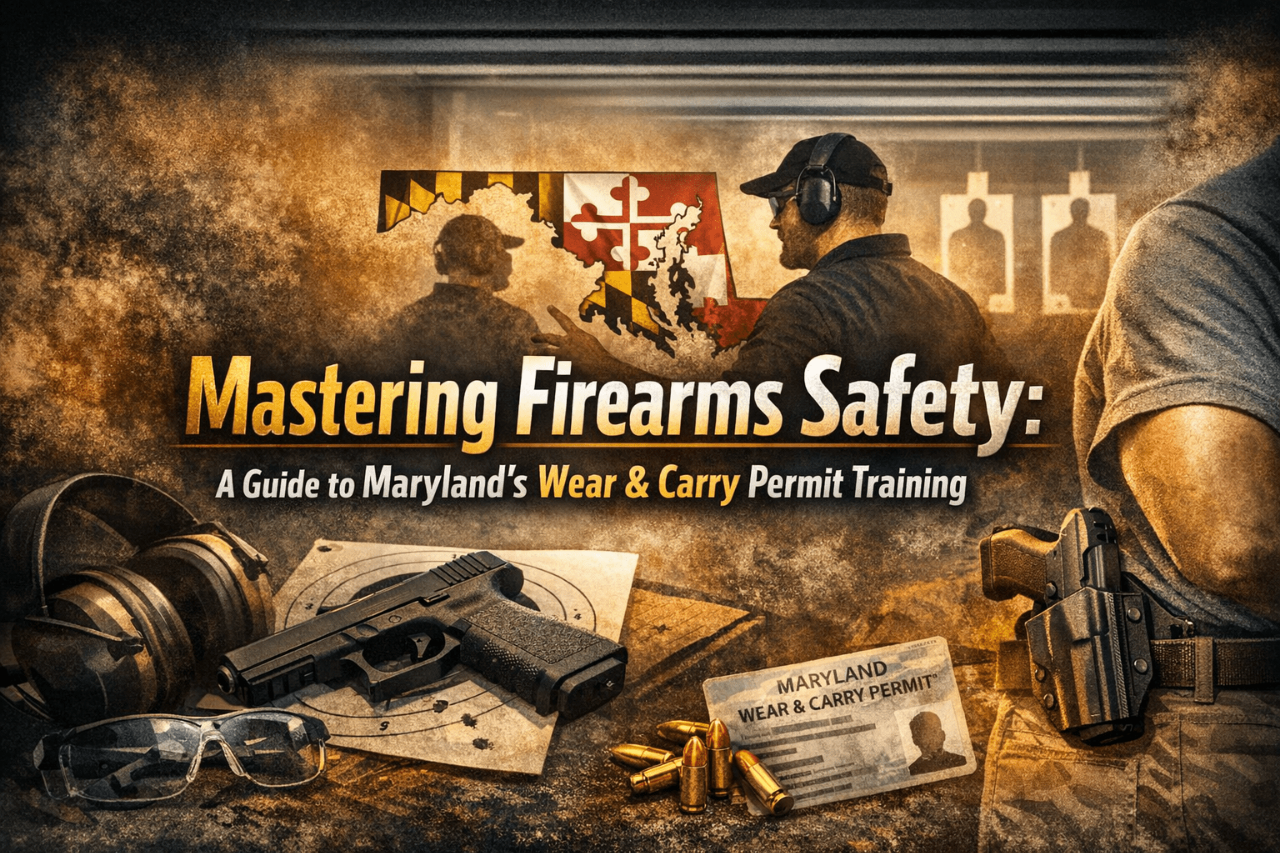
Every student should learn and follow these basic firearm safety rules:
- Treat every firearm as if it is loaded.
- Always point the firearm in a safe direction.
- Keep your finger off the trigger until you are ready to fire.
- Know your target and what is beyond it.
- Store firearms safely and away from children or other people who should not have access.
- Use only the correct ammunition for your firearm.
- Wear eye and ear protection during live-fire training.
- Never handle firearms while under the influence of alcohol, drugs, or extreme tiredness.
- Stay in control of the firearm at all times.
- Follow all range rules, instructor directions, and safety laws.
Safety is more than a checklist. It is a way of thinking. Good training helps you build safe habits that last long after the class is over.
Maryland Wear & Carry Permit Training
Who Needs a Wear & Carry Permit?
You need a Maryland Wear & Carry Permit if you want to legally carry a handgun outside your home. This may apply to private citizens, business owners, security workers, and other professionals.
What the Training Usually Covers
Wear & Carry training often covers important topics such as:
- Maryland firearm laws and carry rules.
- Situational awareness and how to avoid conflict.
- Safe firearm handling and storage.
- Use-of-force laws and responsibilities.
- How to transport and store a handgun legally.
- Live-fire training and qualification.
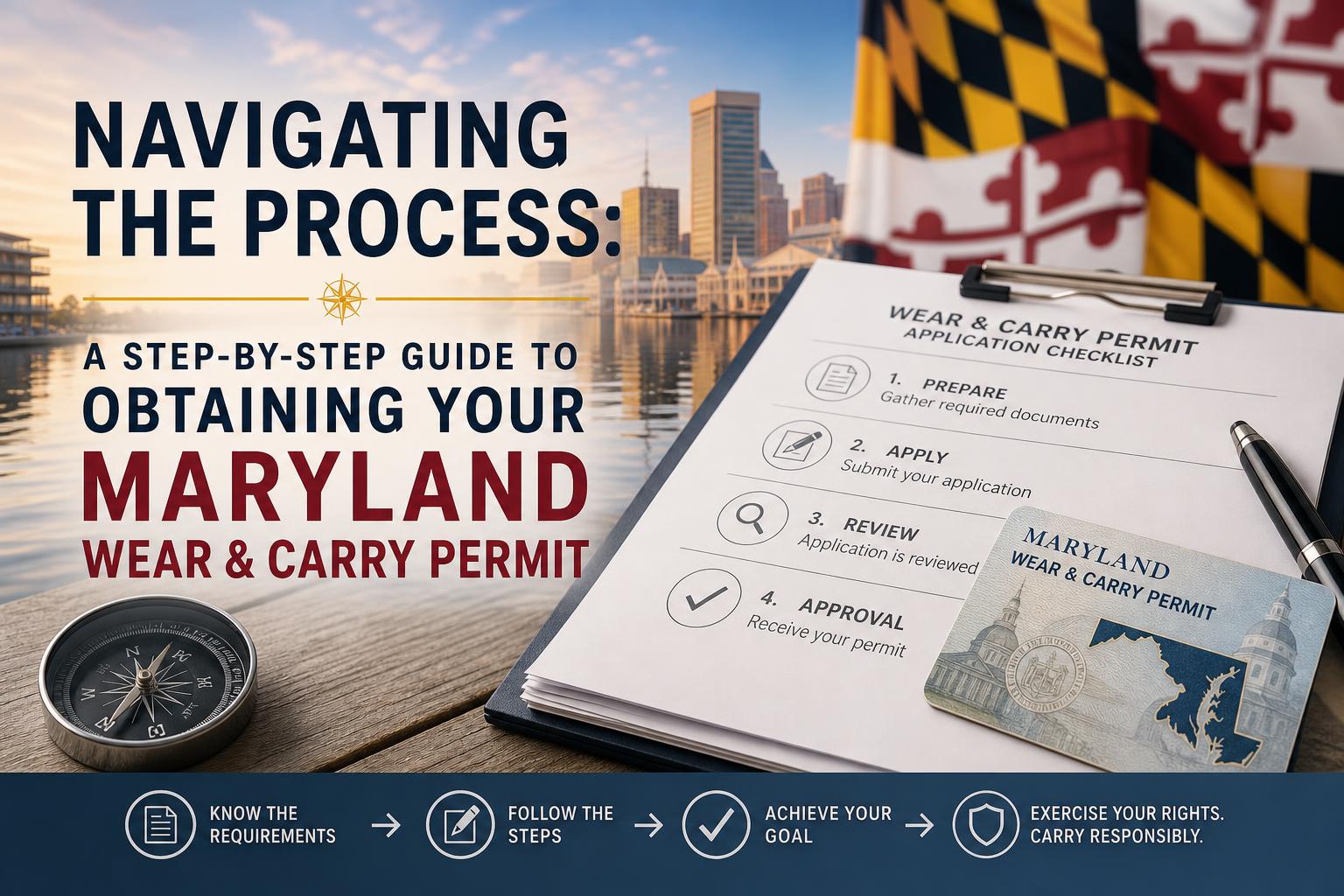
- The permit application process.
- Renewal training requirements.
- The duties of carrying a firearm in public.
- Legal results of unsafe or careless firearm use.
By the end of training, students should better understand the law, safety rules, and the serious responsibility of carrying a handgun.
Maryland Handgun Qualification License
What Is the HQL?
The Maryland Handgun Qualification License, or HQL, is needed before you can buy, rent, or receive a handgun in Maryland. It is often the first step for new handgun owners.
What Students Learn in HQL Training
HQL training usually includes:
- Basic handgun safety.
- Maryland handgun laws.
- Safe storage rules.
- Basic handgun parts and operation.
- The duties of handgun ownership.
- An overview of the buying process.
- Fingerprinting and application steps.
- Common mistakes to avoid.
- The difference between owning a handgun and carrying one in public.
- Why continued safety training is important.
HQL vs. Wear & Carry Permit
The HQL and the Wear & Carry Permit are not the same. The HQL is for buying, renting, or receiving a handgun. The Wear & Carry Permit is for carrying a handgun in public.
Some people may need one. Others may need both. A trained instructor can help you understand which class fits your goals.
Security Guard Certification in Maryland
The Role of Security Guard Training
Security guards help protect people, property, and businesses. Proper training helps guards know what they can and cannot do. It also teaches them how to respond in a safe and professional way.
Topics Often Included in Security Guard Training
Security guard training may include:
- Legal duties and limits of authority.
- Professional conduct and ethics.
- Communication and de-escalation skills.
- Report writing and documentation.
- Emergency response steps.
- Observation and patrol methods.
- Access control and property protection.
- Conflict management.
- Firearm safety for armed security roles.
- Maryland security rules and regulations.
Armed vs. Unarmed Security Training
Unarmed guards usually focus on watching, reporting, communication, and safety. Armed guards need extra firearm safety and legal training.
Some employers may also require more training than the state minimum. Extra training can help guards feel more ready for the job.
Choosing the Right Firearm Safety Training Provider
What to Look for in a Maryland Firearm Instructor
The right instructor can make a big difference. Before you sign up for a class, look for:
- Proper credentials and Maryland training experience.
- A strong understanding of current state laws.
- A clear focus on safety and responsible firearm ownership.
- A clean and professional classroom setting.
- Safe and organized live-fire instruction.
- Experience teaching both beginners and experienced students.
- Clear prices and class schedules.
- Good student reviews.
- Help with application steps when needed.
- A focus on continued learning after certification.
Getting Ready for Your Maryland Firearm or Security Course
What to Do Before Class
Good preparation helps class go smoothly. Before your course, you should:
- Review the course requirements.
- Bring a valid photo ID.
- Complete any needed forms.
- Dress properly for classroom and range training.
- Avoid alcohol or any substance that can affect your judgment.
- Arrive on time.
- Ask questions if you do not understand something.
- Follow all instructor and range rules.
- Bring required safety gear if it is not provided.
Common Mistakes to Avoid
Try to avoid these common mistakes:
- Thinking handgun ownership means you can carry in public without a permit.
- Confusing HQL rules with Wear & Carry rules.
- Waiting too long to schedule your training.
- Ignoring safe storage duties.
- Picking a class only because it is the cheapest option.
- Not learning Maryland-specific firearm laws.
- Skipping practice after class.
- Bringing the wrong gear to the range.
- Thinking certification is the end of training.
- Forgetting how serious it is to carry or work as a guard.
The Value of Continuing Education
Why Certification Is Only the Beginning
Firearm laws can change. Skills can fade without practice. Safe habits get stronger when you use them often. That is why training should not stop after you earn your certificate.
Next Steps After Certification
After your class, you should keep learning and practicing. Helpful next steps include:
- Take refresher safety courses.
- Practice at a safe and trusted range.
- Learn more about safe firearm storage.
- Stay updated on Maryland firearm law changes.
- Consider advanced safety, defense, or de-escalation classes.
- Keep copies of your training records.
- Track renewal dates so you do not miss them.
- Get instruction when using new equipment.
- Teach safe habits to responsible adults in your home.
- Keep building safe habits over time.
Conclusion
Maryland firearm and security training can help you stay safe, follow the law, and feel more prepared. Whether you need the HQL, a Wear & Carry Permit, Security Guard Certification, or a refresher course, the right training matters.
If you are ready to take the next step, contact STA Security Training Classes today. Call (443) 702-7891 or enroll in a course online to start your Maryland firearm or security training with confidence.

Leave a Reply